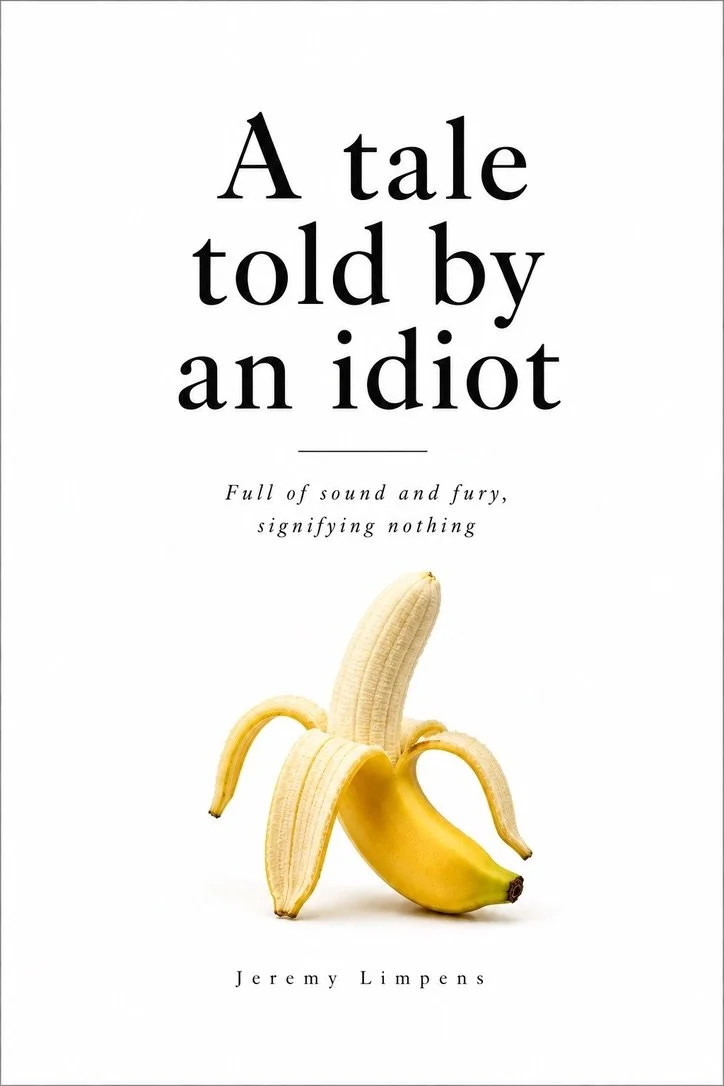
Introduction to A Tale Told by an Idiot — A tragicomical memoir that follows the journey of life full of sound and fury, in the end as Shakespeare said, signifying nothing. Or does it?
It was just another day at the office.
The kind that begins with an early-morning commute to work. I'm not talking about one of those notorious train lines where people wrestle for the last remaining seat, or a peak-hour Monday morning where drivers compete to reach the next red traffic light first in a bid to reach their final destination, an office that fails to meet the criteria to qualify as a free-range chicken. It was a conflict zone. The kind where you’re passing by children playing in the street alongside soldiers carrying machine guns, and military vehicles that outnumber school buses and morning commuters.
At the time, I was working in East Timor, during one of its more volatile periods, in a place the Australian Department of Foreign Affairs and Trade strongly advised people not to visit due to the physical safety risk to foreigners. It was a time marked by political instability, splintering armed forces, street violence, and the kind of unrest that eventually required international military intervention.
I was employed by a private organisation involved in international aid and development, tasked with developing their health and safety risk management plan. That's a polished way of saying I spent my days advising well-intentioned expatriate staff on things like: don't argue with people carrying guns, don't eat meat that's been hanging in the sun for three days, when driving give way to anything larger than you, and if you get seriously ill, consider the local healthcare system to be more dangerous than the local renegade soldiers.
Despite the ever-present risk of violence, and the near certainty of contracting a gastrointestinal illness capable of delivering a more effective weight-loss outcome than any wellness influencer on Instagram, East Timor was a place of remarkable contrast. Portuguese colonial history sat alongside vibrant local markets; rough, potholed roads gave way to breathtaking natural beauty; and a recently completed operating theatre in a very basic hospital stood proudly, except they'd forgotten to install lights. And if you timed it right, you could eat fresh local seafood at a beachside restaurant, your feet in the sand, watching the sun set in a warm, humid breeze.
Life was relatively good for the expatriates, but not so much for the locals. Children playing in the streets accompanied by soldiers and the ever-present risk of civil unrest from soldiers and armed factions engaged in street clashes, pillaging, and arson. Meanwhile, back home, we were busy getting upset about kids with spray cans tagging walls, a train delayed by 10 minutes, or complaining about having to wait a couple of hours for world-class healthcare. With lights included!
It was a strange mix of danger and beauty. Chaos and calm. Business and pleasure.
At this point in my life, this kind of work felt normal to me.
My role was part of a broader portfolio that had me advising organisations ranging from private companies and government departments to mining corporations and international aid agencies operating in high-risk environments. The work involved contingency planning for situations where things might, to use the technical term, go pear-shaped. There are parts of the world where it really pays not to get sick or injured.
From the outside, it probably looked glamorous enough. I was paid to travel domestically and overseas, stay in decent hotels, be a platinum Qantas Frequent Flyer, and occasionally wear a fancy suit. Life, by most conventional measures, was interesting.
But standing there in East Timor, navigating daily security briefings, watching armed patrols move through the streets, and casually factoring civil unrest into my morning routine, as opposed to a yoga class, tight pants and a café latte, a question began to surface. Not urgently. Not dramatically. Just quietly.
How did I end up here?
People asked me versions of that question often.
How did you get this job? Why do you do this kind of work? Why would you put yourself in these situations?
The truth was, I never had a neat answer.
I hadn't followed a plan. I hadn't taken the direct route. Whatever path had led me here looked less like a career trajectory designed by a high-school careers counsellor, and more like a bowl of cooked spaghetti, tangled, looping, and hard to explain without using both hands.
And yet, here I was, calling this "work." Living on a big, rickety old sailboat made in Taiwan.
The answer to how I ended up here isn't straightforward. It doesn't begin in East Timor. It doesn't even begin with this job. It begins much earlier, in places that seem unrelated at first, with a chocolate shop in post-war Netherlands, a convict lineage in Tasmania, a school dropout, a near-death experience at seventeen, and a long series of decisions that made sense only at the time. Most importantly, absolutely no plan. There is no map. There never was.
To make matters more interesting, it was around this time that I bought a boat. Not your typical boat. A 51-foot Formosa ketch, built in Taiwan, affectionately known among sailors as a ‘Leaky Teaky’, on account of the teak decking fixed with cheap screws that rusted, allowing water to seep steadily into the living quarters below. I sailed it 2,400 nautical miles south through what was one of northern Queensland's largest cyclones on record. And then I lived on it. Me, my second mate, and eventually, my two beautiful girls.
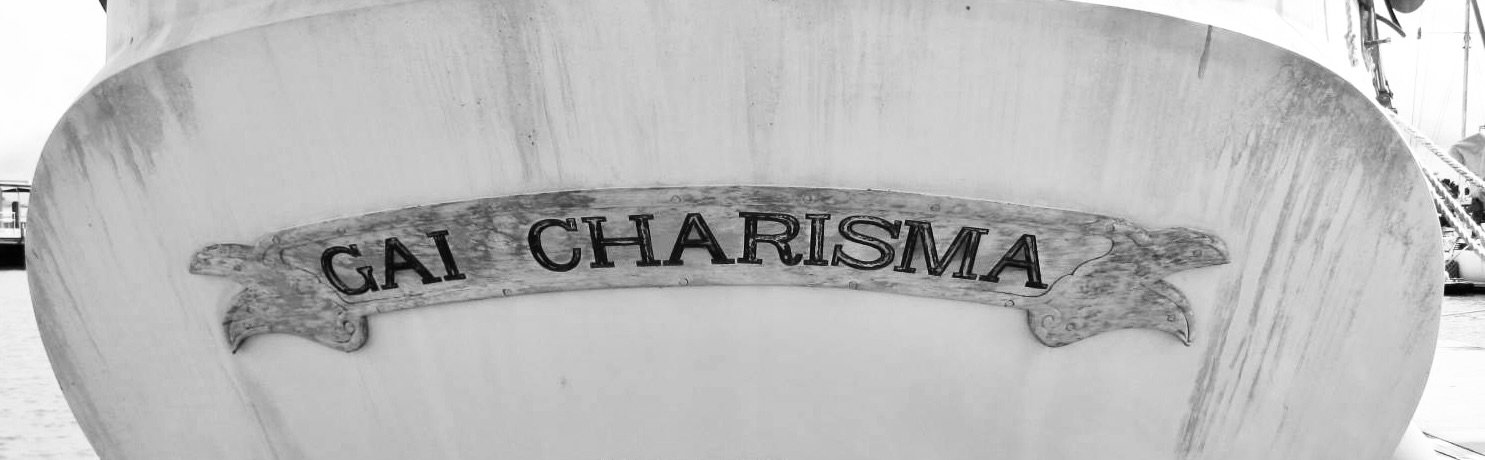
The boat had a history. Four owners. A bordello. A plane crash. A man found in wreckage days after driving off a road. And a drunken phone call the morning we departed, the previous owner, who I'd never met, slurring his final piece of departing advice: don't use the starboard fuel tank, it's got water in it. He was dead the following week. The boat's name was Gai Charisma, a name given by the second owner, who also died in tragic circumstances, stitched together from his family's names, in flagrant violation of one of maritime culture's most sacred superstitions. Changing a boat's name without the proper ceremony is said to incur the wrath of Poseidon/Neptune, who keeps a "Ledger of the Deep" containing all ship names. Changing it without a proper, elaborate "de-naming" ceremony is forbidden. Cross it out without permission, and the sea gods notice.
Seems I too made the sea gods angry, along with a German second mate that personified schadenfreude. In hindsight, I should not have been so dismissive of the folklore and superstitions deeply ingrained in maritime culture. I'm suspecting it had something to do with changing the vessels name, the bananas, the Friday departure, and the women aboard. I was left with the question. Was it all due to the curse of Gai Charisma, the wrath of the Sea Gods, or something else? Turns out, most likely something called Zemblanity, the quiet accumulation of bad decisions that masquerades as fate. That story deserves its own chapter. And its own bottle of something strong. Turns out, even the Bermuda Triangle resembles my own life.
So, if you're wondering how a person ends up in places like this, living this kind of life, you're not alone.
I've been asking myself the same question ever since. Hence this book.
Over the preceding three decades, and across roughly half the globe, I treated work and travel less like a career path and more like a cheap smorgasbord. Hospitals, emergency departments, disaster zones, humanitarian warzones. Remote Aboriginal communities in the outback, Inuit cultures in the Arctic Circle. Prisons, universities, and ships off Central America, Alaska, and Mexico to name a few. I seemed to want a taste of everything, sometimes going back for seconds. We like to think we're migratory birds with some innate sense of direction. We're not. We're drunken pigeons with ambition.
And who'd have thought that a large chainsaw that almost took my leg off would set off a chain of events that would later be a stroke of good fortune.
Somewhere along the way, I also found myself flying between Arctic airstrips in weather that makes most people quietly reconsider their life choices, and that left me violently motion sick, at times feeling more unwell and incapacitated than the patient I was meant to be caring for.
The jobs followed the same logic. Or lack of it. I've been a flight paramedic, emergency and remote area nurse, aid worker, executive manager, lecturer, ski instructor, white-water rafting guide, and what I can only describe as an accidental anthropologist, wandering into different human ecosystems and watching people do what people do when they think no one important is looking.
I swapped bodily fluids for board meetings, an ambulance for a suit and tie, and somewhere in the process became an unintentional participant in the tragicomic circus of modern bureaucracy. I've also been paid, on more than one occasion, to stay away from the workplace. And no, it had nothing to do with the time I was accused of killing someone. Twice.
Oddly enough, the biggest risks rarely came from where you expect them to. As one colleague once said, "I felt safer disarming bombs in Afghanistan."
This isn't a self-help book. Far from it. It's the antithesis of one. It's a story told by someone who spent years stumbling through chaos with more instinct than strategy, and a front-row seat to the absurd theatre of being human. There are no heroes here, least of all me, just people doing their best in situations that often feel like they were designed by a committee halfway through a wine tasting.
One thing is for sure. I've been so fortunate. I had a front row seat to the greatest show on earth. Animals don't do what humans do to each other and themselves. And apparently, we are the smart ones. Turns out, contrary to popular belief, the smarter we are, the worse we can be. Maybe just less likely to get caught.
At its heart, this is a story about contradictions: bravery and stupidity, chaos and calm, empathy and ego, meaning and madness. About the strange pull that keeps drawing us toward danger and beauty in equal measure. What Freud might have called Thanatos; the long, ridiculous detour we take getting from beginning to end. A story stitched together with irony, hypocrisy, oxymorons, and the strange poetry of human behaviour.
If this book had a soundtrack, it would be a duet across time: Sinatra singing I Did It My Way and Édith Piaf's defiant Non, je ne regrette rien — No, I regret nothing. Not even the time a chainsaw went through my leg down to the bone. Between those two refrains lies the spirit of these pages: flawed, fearless, occasionally unhinged, and determined to wring some joy, meaning, and mischief from the madness.
Shakespeare called life "a tale told by an idiot, full of sound and fury, signifying nothing." He wasn't wrong. But perhaps he was only half right. Macbeth arrives at that line standing at the end of everything, the ambition, the wreckage, the unravelling. He concludes that it meant nothing. Pure nihilism. Life as noise. I've spent thirty years in the noise, and I'm not so sure. The axe through the corrugated iron was real. The leg with the blue sneaker was real. The frozen lake at minus thirty was real. And the table at the end of it, the food, the people who showed up, the mess and the laughter, that was real too. Maybe that's what signifying something actually looks like. Not a grand meaning. Not a plan. Just the noise, and what you noticed along the way.