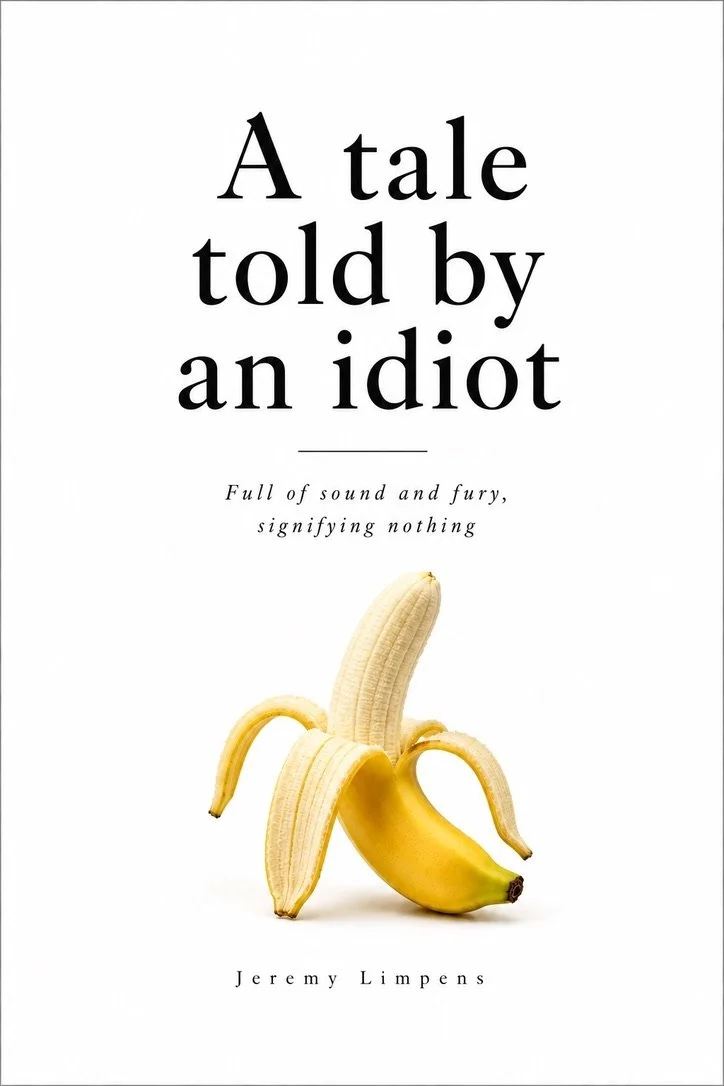
A Tale Told by an Idiot

Comment

A Tale Told by an Idiot

Introduction to A Tale Told by an Idiot — A tragicomical memoir that follows the journey of life full of sound and fury, in the end as Shakespeare said, signifying nothing. Or does it?

It was just another day at the office.

The kind that begins with an early-morning commute to work. I'm not talking about one of those notorious train lines where people wrestle for the last remaining seat, or a peak-hour Monday morning where drivers compete to reach the next red traffic light first in a bid to reach their final destination, an office that fails to meet the criteria to qualify as a free-range chicken. It was a conflict zone. The kind where you’re passing by children playing in the street alongside soldiers carrying machine guns, and military vehicles that outnumber school buses and morning commuters.

At the time, I was working in East Timor, during one of its more volatile periods, in a place the Australian Department of Foreign Affairs and Trade strongly advised people not to visit due to the physical safety risk to foreigners. It was a time marked by political instability, splintering armed forces, street violence, and the kind of unrest that eventually required international military intervention.

I was employed by a private organisation involved in international aid and development, tasked with developing their health and safety risk management plan. That's a polished way of saying I spent my days advising well-intentioned expatriate staff on things like: don't argue with people carrying guns, don't eat meat that's been hanging in the sun for three days, when driving give way to anything larger than you, and if you get seriously ill, consider the local healthcare system to be more dangerous than the local renegade soldiers.

Despite the ever-present risk of violence, and the near certainty of contracting a gastrointestinal illness capable of delivering a more effective weight-loss outcome than any wellness influencer on Instagram, East Timor was a place of remarkable contrast. Portuguese colonial history sat alongside vibrant local markets; rough, potholed roads gave way to breathtaking natural beauty; and a recently completed operating theatre in a very basic hospital stood proudly, except they'd forgotten to install lights. And if you timed it right, you could eat fresh local seafood at a beachside restaurant, your feet in the sand, watching the sun set in a warm, humid breeze.

Life was relatively good for the expatriates, but not so much for the locals. Children playing in the streets accompanied by soldiers and the ever-present risk of civil unrest from soldiers and armed factions engaged in street clashes, pillaging, and arson. Meanwhile, back home, we were busy getting upset about kids with spray cans tagging walls, a train delayed by 10 minutes, or complaining about having to wait a couple of hours for world-class healthcare. With lights included!

It was a strange mix of danger and beauty. Chaos and calm. Business and pleasure.

At this point in my life, this kind of work felt normal to me.

My role was part of a broader portfolio that had me advising organisations ranging from private companies and government departments to mining corporations and international aid agencies operating in high-risk environments. The work involved contingency planning for situations where things might, to use the technical term, go pear-shaped. There are parts of the world where it really pays not to get sick or injured.

From the outside, it probably looked glamorous enough. I was paid to travel domestically and overseas, stay in decent hotels, be a platinum Qantas Frequent Flyer, and occasionally wear a fancy suit. Life, by most conventional measures, was interesting.

But standing there in East Timor, navigating daily security briefings, watching armed patrols move through the streets, and casually factoring civil unrest into my morning routine, as opposed to a yoga class, tight pants and a café latte, a question began to surface. Not urgently. Not dramatically. Just quietly.

How did I end up here?

People asked me versions of that question often.

How did you get this job? Why do you do this kind of work? Why would you put yourself in these situations?

The truth was, I never had a neat answer.

I hadn't followed a plan. I hadn't taken the direct route. Whatever path had led me here looked less like a career trajectory designed by a high-school careers counsellor, and more like a bowl of cooked spaghetti, tangled, looping, and hard to explain without using both hands.

And yet, here I was, calling this "work." Living on a big, rickety old sailboat made in Taiwan.

The answer to how I ended up here isn't straightforward. It doesn't begin in East Timor. It doesn't even begin with this job. It begins much earlier, in places that seem unrelated at first, with a chocolate shop in post-war Netherlands, a convict lineage in Tasmania, a school dropout, a near-death experience at seventeen, and a long series of decisions that made sense only at the time. Most importantly, absolutely no plan. There is no map. There never was.

To make matters more interesting, it was around this time that I bought a boat. Not your typical boat. A 51-foot Formosa ketch, built in Taiwan, affectionately known among sailors as a ‘Leaky Teaky’, on account of the teak decking fixed with cheap screws that rusted, allowing water to seep steadily into the living quarters below. I sailed it 2,400 nautical miles south through what was one of northern Queensland's largest cyclones on record. And then I lived on it. Me, my second mate, and eventually, my two beautiful girls.

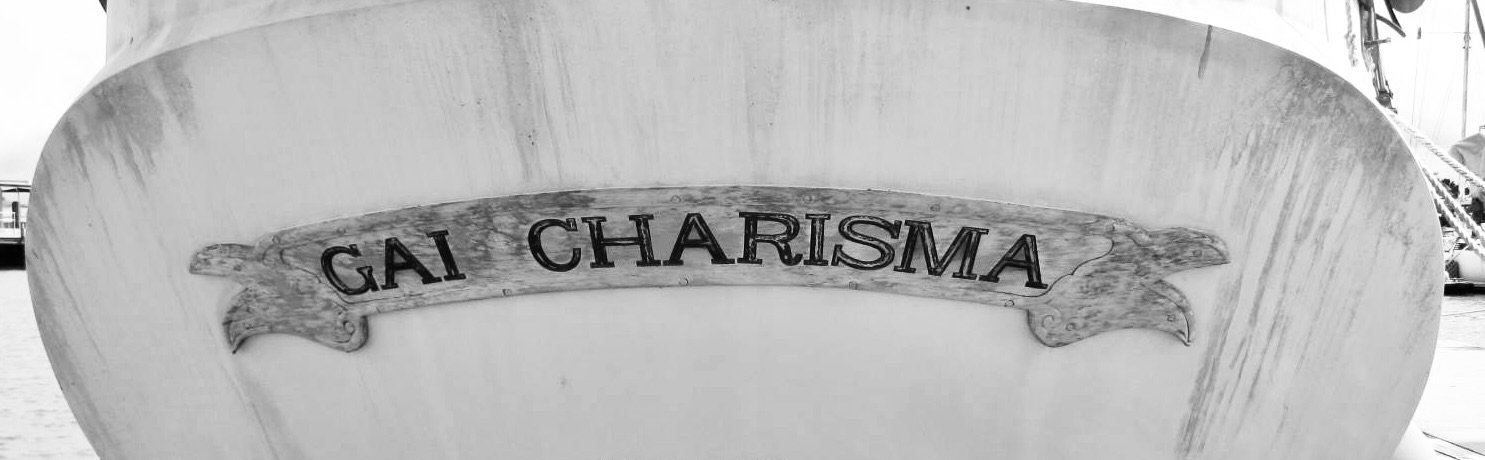
The boat had a history. Four owners. A bordello. A plane crash. A man found in wreckage days after driving off a road. And a drunken phone call the morning we departed, the previous owner, who I'd never met, slurring his final piece of departing advice: don't use the starboard fuel tank, it's got water in it. He was dead the following week. The boat's name was Gai Charisma, a name given by the second owner, who also died in tragic circumstances, stitched together from his family's names, in flagrant violation of one of maritime culture's most sacred superstitions. Changing a boat's name without the proper ceremony is said to incur the wrath of Poseidon/Neptune, who keeps a "Ledger of the Deep" containing all ship names. Changing it without a proper, elaborate "de-naming" ceremony is forbidden. Cross it out without permission, and the sea gods notice.

Seems I too made the sea gods angry, along with a German second mate that personified schadenfreude. In hindsight, I should not have been so dismissive of the folklore and superstitions deeply ingrained in maritime culture. I'm suspecting it had something to do with changing the vessels name, the bananas, the Friday departure, and the women aboard. I was left with the question. Was it all due to the curse of Gai Charisma, the wrath of the Sea Gods, or something else? Turns out, most likely something called Zemblanity, the quiet accumulation of bad decisions that masquerades as fate. That story deserves its own chapter. And its own bottle of something strong. Turns out, even the Bermuda Triangle resembles my own life.

So, if you're wondering how a person ends up in places like this, living this kind of life, you're not alone.

I've been asking myself the same question ever since. Hence this book.

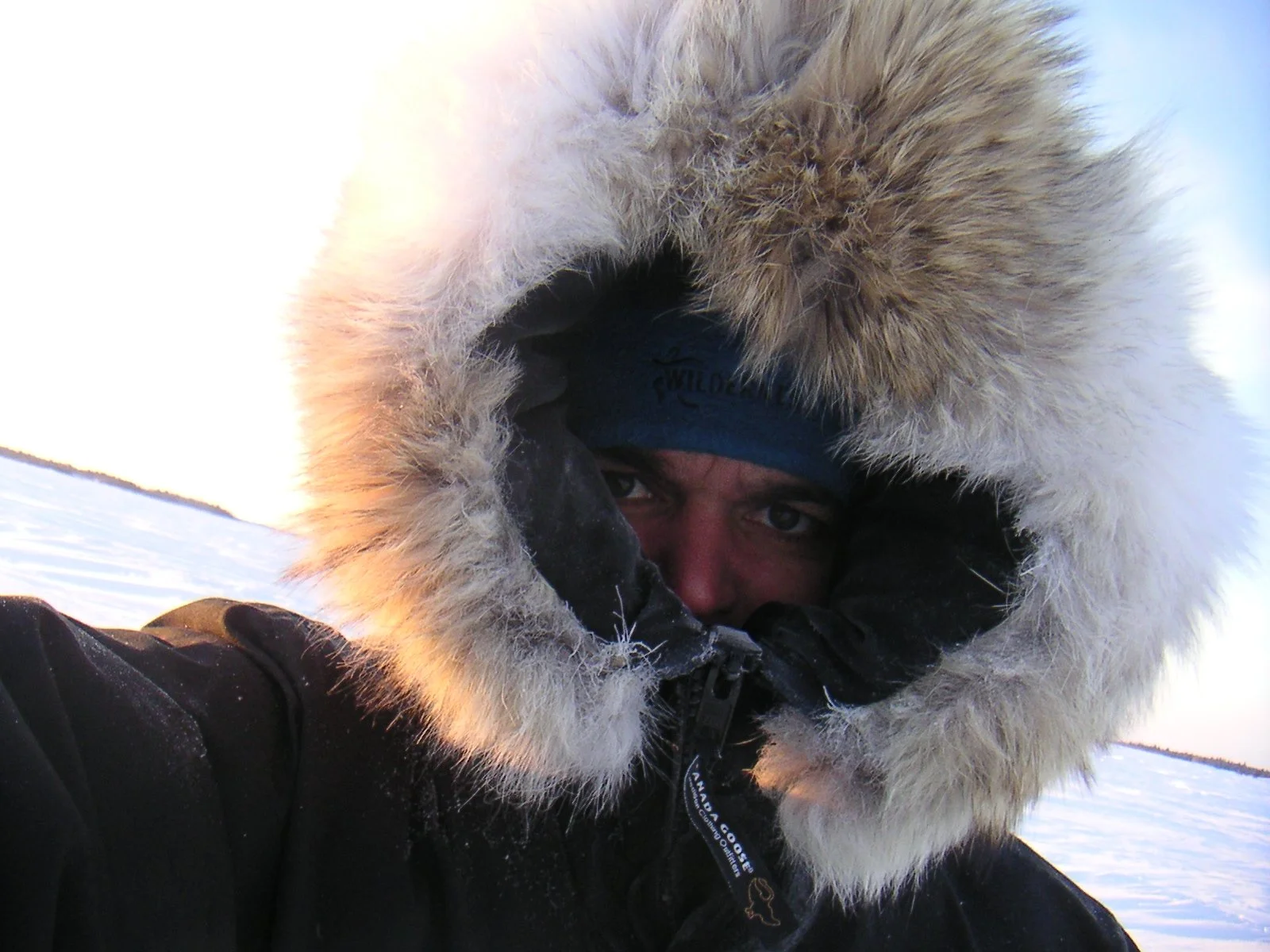
Over the preceding three decades, and across roughly half the globe, I treated work and travel less like a career path and more like a cheap smorgasbord. Hospitals, emergency departments, disaster zones, humanitarian warzones. Remote Aboriginal communities in the outback, Inuit cultures in the Arctic Circle. Prisons, universities, and ships off Central America, Alaska, and Mexico to name a few. I seemed to want a taste of everything, sometimes going back for seconds. We like to think we're migratory birds with some innate sense of direction. We're not. We're drunken pigeons with ambition.

And who'd have thought that a large chainsaw that almost took my leg off would set off a chain of events that would later be a stroke of good fortune.

Somewhere along the way, I also found myself flying between Arctic airstrips in weather that makes most people quietly reconsider their life choices, and that left me violently motion sick, at times feeling more unwell and incapacitated than the patient I was meant to be caring for.

The jobs followed the same logic. Or lack of it. I've been a flight paramedic, emergency and remote area nurse, aid worker, executive manager, lecturer, ski instructor, white-water rafting guide, and what I can only describe as an accidental anthropologist, wandering into different human ecosystems and watching people do what people do when they think no one important is looking.

I swapped bodily fluids for board meetings, an ambulance for a suit and tie, and somewhere in the process became an unintentional participant in the tragicomic circus of modern bureaucracy. I've also been paid, on more than one occasion, to stay away from the workplace. And no, it had nothing to do with the time I was accused of killing someone. Twice.

Oddly enough, the biggest risks rarely came from where you expect them to. As one colleague once said, "I felt safer disarming bombs in Afghanistan."

This isn't a self-help book. Far from it. It's the antithesis of one. It's a story told by someone who spent years stumbling through chaos with more instinct than strategy, and a front-row seat to the absurd theatre of being human. There are no heroes here, least of all me, just people doing their best in situations that often feel like they were designed by a committee halfway through a wine tasting.

One thing is for sure. I've been so fortunate. I had a front row seat to the greatest show on earth. Animals don't do what humans do to each other and themselves. And apparently, we are the smart ones. Turns out, contrary to popular belief, the smarter we are, the worse we can be. Maybe just less likely to get caught.

At its heart, this is a story about contradictions: bravery and stupidity, chaos and calm, empathy and ego, meaning and madness. About the strange pull that keeps drawing us toward danger and beauty in equal measure. What Freud might have called Thanatos; the long, ridiculous detour we take getting from beginning to end. A story stitched together with irony, hypocrisy, oxymorons, and the strange poetry of human behaviour.

If this book had a soundtrack, it would be a duet across time: Sinatra singing I Did It My Way and Édith Piaf's defiant Non, je ne regrette rien — No, I regret nothing. Not even the time a chainsaw went through my leg down to the bone. Between those two refrains lies the spirit of these pages: flawed, fearless, occasionally unhinged, and determined to wring some joy, meaning, and mischief from the madness.

Shakespeare called life "a tale told by an idiot, full of sound and fury, signifying nothing." He wasn't wrong. But perhaps he was only half right. Macbeth arrives at that line standing at the end of everything, the ambition, the wreckage, the unravelling. He concludes that it meant nothing. Pure nihilism. Life as noise. I've spent thirty years in the noise, and I'm not so sure. The axe through the corrugated iron was real. The leg with the blue sneaker was real. The frozen lake at minus thirty was real. And the table at the end of it, the food, the people who showed up, the mess and the laughter, that was real too. Maybe that's what signifying something actually looks like. Not a grand meaning. Not a plan. Just the noise, and what you noticed along the way.
Comment

Crackers and Dip

Comment

Crackers and Dip

An excerpt from A Tale Told by an Idiot — Full of sound and fury, signifying nothing. A tragicomical memoir in progress.

Chapter 3 — Crackers and Dip

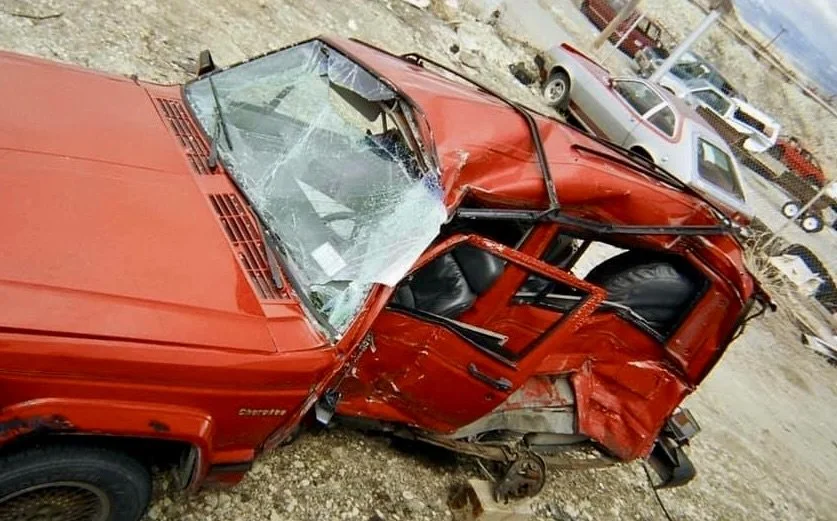
It was just another day at the office — attempting to find a woman's pulse as she sat lifeless in the front seat of her car, a red Jeep Cherokee, her head slumped forward, her face covered in blood, shattered glass everywhere, the car resembling something that had had a fight with a wrecking ball. It was around 10pm, the middle of winter, and snowing. I was unable to find a pulse, and her breathing was sporadic. As I shone my torch on her face, she was pale. The picture was grim. We were somewhere in Montana, on the I-90, quite a distance from the nearest town, with a group of irate bystanders hurling insults and advice to leave her alone, claiming that an ambulance was en route.

At that point, feeling a little overwhelmed, I had one question. Where the fuck was Tim?

Rewind twenty minutes or so. Tim and I had come across what appeared to be a car accident as we approached on the opposite side of the road. We were making our way home to Vancouver after a great day's skiing at Jackson Hole in Wyoming — the final leg of a one-month skiing road trip across the USA, during which we'd covered the classics: Vegas, the Grand Canyon, all-you-can-eat buffets, and of course, the first ever Colonel Sanders Kentucky Fried Chicken restaurant.

As we approached the scene on a highway covered in a blanket of snow in the dark of night, Tim and I — both working in a large trauma hospital in Vancouver at the time — found ourselves debating whether to stop or not. When I say debate, given it involved yelling and arguing, it was more of a verbal boxing match.

I eventually won. We agreed to stop. With Tim at the wheel, he started to apply the brakes. Next thing we knew, the van started to slide on the icy road. Tim started yelling again. "Where do I stop?" I yelled back, "I don't fucking care, just stop!" Before we knew it, we were slipping and sliding past the scene at speed, which by this point, despite the lack of light, had all the features of an accident — several cars pulled over, people standing around.

By the time we stopped, we were some distance down the road. I donned a jacket, grabbed a torch, and made my way back up to the accident scene — or as it turned out, a bystanders' convention.

Initially, it was difficult to piece together the puzzle. It was dark. A white van sat stopped in the middle of the two-lane eastbound highway with damage to the front end. Other cars were parked on the side of the road. There was a wide stretch of snow-covered grass, about twenty metres wide, between the east and westbound lanes, where a group of people stood in a circle talking amongst themselves. Meanwhile, eastbound traffic continued to make its way through the scene, at times coming dangerously close to adding more chaos to the situation.

I made my way to the group and asked what I thought was a straightforward question: "Does anyone need any help?" Someone responded, "It's okay, an ambulance is on the way." I found that an odd response. "What for?" I asked. The same man pointed towards a vehicle about twenty metres away, sitting on the centre strip, with no one near it. In the front seat, alone, a body sat motionless.

As I moved toward the car, I could see the entire left side was smashed in — what we referred to in the business as being T-boned. The nature of an impact where one vehicle slams into the side of another.

Was she dead? That was my first thought.

Fortunately, this was in the days when there were only two options: male or female. Her head was slumped forward, a little to the left, as she sat in the driver's seat. The car door was buckled from the impact. As I attempted to open it, the same people I'd spoken to followed — not to assist, but to heckle. "Leave her alone," they said. "There's an ambulance coming."

I had no doubt there was an ambulance coming. I just wasn't sure when. And that matters. I could see no lights from a nearby town. I continued, ignoring the peanut gallery. The more I ignored them, the louder and more forceful they became. Here I was trying to gain access to assess her, while the crowd threw insults my way as though I were a bad comedian on stage at a pub with a drunken audience. It was impossible to concentrate.

At that point, I stopped, turned to the peanut gallery, and calmly asked a question.

"Does anyone else have a background in first aid or healthcare?"

A question that appeared quite innocent but was in fact a sneaky interview assessing for credibility.

Their response? A combination of mumbling and the sound of crickets.

My response? A cross between a crazed maniac and someone stepping on a landmine.

At the top of my voice, I yelled, "Well, shut the fuck up, because I'm trying to concentrate — unless you can help, walk the fuck away."

I turned around and returned my focus to the driver. I could not find a pulse, nor sense she was breathing. Her head was slumped further forward than I'd ever seen. I couldn't help but think: broken neck?

At that point, a woman appeared from behind and hesitantly asked, "Is there something I can do to help?" I asked her to find a first aid kit — ideally some gloves, given the presence of blood. A lot of blood. She soon returned with one glove and a beach towel.

A beach towel and one glove. Perfect.

I created a makeshift hard collar for her neck. As for the glove — now I could put one hand in places you shouldn't touch without one. Or consent, for that matter. I was desperate to find a pulse. I was also desperate to find Tim.

Given the sporadic and shallow breathing, this was not a good picture. I wanted to get her out of the car.

Where the fuck was Tim?

Like a poorly timed game of Where's Wally, Tim was still in our van a few hundred metres down the road, eating crackers and dip. None the wiser, blissfully unaware of what was playing out. Fortunately, he eventually became bored — maybe a little curious — and made his way through the dark toward the roadside circus. He'd missed the best act. Me, losing my shit. Thank God he missed it, because he would never have let me live it down. Just as I don't let him live it down that he was eating crackers and dip — twenty years on.

As he walked in, belly filled with crackers and dip, I gave him the picture. "Can't find a pulse, her breathing's ineffective, she's cyanotic. Suspecting internal bleeding, maybe a spinal fracture. We need to pull her out."

Tim and I worked in the same emergency department at Vancouver General Hospital, so we knew what to do. Sort of. The heckling, the single glove, and the beach towel as medical supplies were new. But everything else was the same. Sort of. We improvised.

Like a deer in headlights, Tim stood bewildered, still getting his head around the scene. Before long, we started to remove her from the front seat — but there was a catch. The seatbelt was stuck. Fortunately, I hadn't offended everyone — a truck driver came to the rescue with a knife. We cut the seatbelt and lifted her out using the top-and-tail technique: me giving her a hug from behind, Tim lifting her legs. We transferred her to the snow-covered ground. Not ideal, but it was all we had.

The next glitch: her leg remained stuck under the crushed dashboard. Let's just say this particular top-and-tail move is not something you learn in yoga class — nor should you.

While all this was going on, apparently an ambulance was en route.

Years later, as I reflected on that night, I realised that truck driver had played a significant role.

Now on the ground, covered in glass, neither Tim nor I could find a pulse. We were close to starting CPR. Then, finally, a sign. She became agitated. A groaning sound. Her arms began to move. Not much — but enough to confirm we had life. We found a pulse in her groin, the femoral artery. The place you find one when it's gone from the wrist. More effective breathing followed. Laying her flat and keeping her head straight gave us the edge we needed.

We were left with more questions than answers. Internal bleeding? Collapsed lung? Spinal injury? Head injury?

Where the fuck was the ambulance?

But thank God Tim was by my side. To share the load. To share the brunt of the hecklers.

We needed one thing: a big fancy hospital with fancy machines. It reminded me of a classic line from Monty Python — "I need the machine that goes bing!" All we had was one glove, a beach towel, and a woman on a bed of snow.

The police arrived. He had a first aid kit. I can't recall exactly what he was doing with it, but it involved something along the lines of putting a Band-Aid on her foot. As I've always said — a first aid kit does not save a life. Controversial, I know.

Around this same time, a loud voice called out: "LOOK OUT, LOOK OUT!"

I was distracted, with my hand in the woman's groin. Sounds wrong, I know — I was monitoring her heart rate. The next thing I heard was a roaring sound, a strong wind tearing through. Then, out the corner of my eye, a glimpse of something passing at high speed.

I looked up. There was no one around. No police. No Tim. No bystanders. No Wally. Just me, wearing one latex glove, and a woman I'd never met, with my hand in her groin.

The loud voice hadn't been another irate bystander — it had been a warning. A truck was out of control as it approached the scene, jack-knifing as it travelled eastbound, its long trailer swinging at right angles across the road. Fortunately, the driver backed off the brakes, the trailer straightened, and it passed through the scene with seconds to spare — missing the woman and me by a few metres.

Everyone else had run for cover.

Nowhere to be seen — along with the ambulance.

This game of Where's Wally was wearing thin.

Eventually, people made their way back. I directed the police officer to do his actual job: go up the road and manage the traffic to prevent another accident, instead of playing with a first aid kit to give the appearance of saving a life.

Finally, the ambulance arrived.

Tim also reappeared. Thank God.

In hindsight, Tim was smart. I would have run too. No one wins a fight with a truck.

By that stage, I was ready to hand over the baton. In my case, one blood-stained glove.

The ambulance officer walked over, dressed in a clearly identifiable uniform. Without delay, I gave a handover. "Upon my arrival, she was unconscious in the driver's seat, head slumped forward, unable to locate a pulse, irregular and ineffective breathing, hypoxic. Given she was haemodynamically unstable, we removed her from the vehicle and placed her supine to commence CPR if needed. Assuming a possible spinal injury, I created a makeshift collar. Once flat, we palpated a femoral pulse and her breathing became slow and regular. I suspect internal bleeding, spinal and head injury given the mechanism of injury, and hypoxic brain injury given the absence of breathing on my arrival."

It's probably fair to say I delivered all of that without a pause, without punctuation, without taking a breath.

The paramedic stood there staring at me. Saying nothing. The same look Tim gave when he first turned up. Come to think of it, the same look some maximum-security prisoners gave me years earlier during a workshop on empathy. Deer in headlights.

I turned to the paramedic and said, "As I said, she's hypoxic. Do you have oxygen?" That got a reaction — she walked off and returned with an oxygen bottle and mask. "As I mentioned, that's a beach towel around her neck — do you have a hard collar?" We swapped it out. "As I mentioned, I suspect a spinal injury and she's lying on snow — do you have a spine board and stretcher?"

We continued this routine until the woman was in the back of the ambulance. All along, the paramedics looked to me for direction while I kept wanting them to take the lead. With the ambulance doors closed, Tim and I looked at each other and simultaneously thought: holy shit.

Tim suggested we head back to the van.

For crackers and dip, I assume.

But one thing wasn't sitting right. The ambulance was still there. The one thing I'd been waiting for — I now wanted gone. A second ambulance had arrived. Two more paramedics stood around. I approached and asked, in what I can only assume was a confused and impatient manner, "Why is that ambulance still here?"

"Why do you ask?"

"Because that woman needed to be in hospital yesterday."

The paramedic responded in a nonchalant manner, suggesting I go tell them to get a move on.

I opened the back doors. The paramedic inside was casually organising equipment as though preparing for morning tea, with the unconscious woman as the main guest. The type of person who prioritises cleaning the kitchen after dinner over spending time with the people still at the table.

"What are you doing? Get going — she has internal bleeding, she needs to be in hospital now."

They listened. They drove off into the dark.

As Tim and I returned to the van and continued west, I regretted not going with them. Back then, there was much debate about whether paramedics should spend less time treating patients at the scene and instead load them fast and drive hard to get them to hospital. The golden hour — the idea that the faster a patient reaches a big fancy hospital, the better the outcome. With the machines that go bing.

That regret deepened over the following days. I came to learn it wasn't quite an ambulance that had arrived. It was, in fact, Wally dressed as a paramedic. Well-meaning — they were volunteers. Which explained why they'd been looking to me for direction. I only wish they'd told me.

It reminded me of the time a drag performer at a show I'd been dragged to approached me with a drink, said my name as though we knew each other, and tried to hit on me. My face apparently said it all. I later learned it was a guy from medical records at the hospital where I worked. If only he'd told me. I wouldn't have given him that look.

Tim and I continued driving for some time that night. The adrenaline takes time to settle.  As we drove, we debriefed. I wondered where the single glove came from. Lucky the truck driver had a knife. The heckling. The woman alone in the car, the peanut gallery standing at a distance away. The truck. My disbelief Tim initially remained back at the van, to eat a sandwich. He made it clear; it was crackers and dip. That last line stood the test of time between us for the next twenty plus years. He remained adamant it was crackers and dip. I remained incredulous.

At the time, it was hard to make sense of. I later came across the words Charles Dickens who once wrote; It was the best of times, it was the worst of times, it was the age of wisdom, it was the age of foolishness, it was the epoch of belief, it was the epoch of incredulity, it was the season of light, it was the season of darkness, it was the spring of hope, it was the winter of despair.”

Yep, that’s it. Captured in once sentence.

As for the woman in the driver’s seat, we didn't have high hopes for her.

Sorry — you'll need to buy the book when it arrives to find out how this story plays out.

Written by; Jeremy Limpens

Comment

 Schadenfreude

Comment

Schadenfreude

Excerpt from A Tale Told by an Idiot: Full of Sound and Fury, Signifying Nothing — a memoir in progress


Chapter 10 — Schadenfreude

It was just another day at the office — sitting around with a group of guys swapping stories. Times gone past, hitting strangers over the head with pool cues, holding up a service station with a sawn-off double-barrel shotgun, stabbing people who “deserved it,” and various other impulsive acts of violence committed against whoever happened to be standing in the wrong place at the wrong time.

Normally, back then, a group of blokes reminiscing would be huddled around a campfire or down at the pub, beers in hand. These days, at the local cafe, sipping on a soy latte while wearing light-coloured chinos and shoes without socks, or even better — or worse, depending on your preference — a Lycra outfit with sponsor logos that weirdly don’t sponsor them, shaved legs, bicycle parked close by.

But not this lot.

This was deep inside the walls of a maximum-security prison, during a victim empathy session that I was a part of. The goal? To discuss their crimes and consider the impact of their actions on the people they’d hurt. A noble goal, sure. But it felt more like trying to teach a goldfish to play chess.

As each prisoner shared the gritty details of their crimes and attempted to squeeze out something resembling empathy, it was like watching someone try to pass a kidney stone. Their facial expressions said it all. You’d ask how their victims might have felt, and in return you’d get a puzzled expression and the thousand-yard stare of someone who’s just been asked to explain quantum mechanics while drunk.

Their faces would then go blank, expressionless. Botox-level blank. Come to think of it, I’ve never actually seen Botox done right. Is there such a thing as “just enough Botox”? Probably not. But I digress.

That day, though I didn’t know it at the time, I met what I went on to later refer to as the unapologetic. The people who could describe horror in perfect detail and feel nothing. I thought they were rare at the time. I thought they only lived behind bars. Turns out, they’re everywhere. Harder to spot, as they don’t all wear prison outfits. Some wear suits.

I first did time in prison back in the late ’90s. But it was during that empathy session with violent offenders that a few uncomfortable truths took root — truths that would stick with me for years and eventually help me understand who you should and shouldn’t let onto your boat. When I say eventually, I mean many, many years. When I say boat, yes, it’s a metaphor, but I learnt this while living on a boat, literally.

Eighteen years on, I found myself back in prison. I was sitting with Michael — a senior operations manager — one rung below the big boss.

Now, when you hear “senior manager,” you might imagine corner offices, ergonomic chairs, skyline views, and an assistant who exists solely to screen calls and fetch oat-milk lattes. Not here.

Michael’s office looked like a poorly furnished room in a trailer park. More like a shipping container dumped on a construction site. And yet here he was, responsible for the safety of an entire community. His portfolio? A maximum-security prison.

I’d worked in places where executives presided over meditation rooms, glass pods, and beanbags, with harbour views to soothe their tortured souls. Their portfolios? Toothpaste sales. A mining company’s “wellness” project. A health fund’s marketing team. Life-or-death stuff.

Meanwhile, Michael’s desk was propped up by Blu Tack and quiet resilience, keeping actual criminals from starting a riot, or scaling a wall, or attempting to escape via the dumpster on rubbish collection day, only to end up wandering into your neighbourhood.

He ran the corrections side — officers, inmates, lockdowns, and cavity searches. I ran the health service — doctors, nurses, dentists, physios, and the kind of mental health services that could scare the paint off a wall. The sort where you needed a sense of dark humour just to survive, like the inmates who did party tricks involving their bowels, purely to score a mini break in the city hospital. Believe me, it was never dull.

Strangely, the inmates were often the easiest part. Prisoners were prisoners. When I say easy, I’m not talking ‘being at ease sharing your personal details’ easy, but for the most part, predictable easy. Staff, however, were colourful. Not in a rainbow-flag kind of way. More like the kind of colour you find in a bruise.

Yep, eighteen years later, there I was — back in prison. Working.

Now, people tend to assume we’re talking men’s prisons. Wrong. I had carriage of both, and whenever I mentioned the women’s facilities to people within the trade, they’d pause, tilt their head, and say the same thing: “Good luck with that.”

Not just because of the inmates, but because of the staff drawn to work there.

The General Manager of the women’s prison once pointed out that men’s prisons rarely get offers from community groups to volunteer to help with inmates. The women’s prison, however, was flooded with offers of support. Let’s just say the general community views female and male prisons a little differently. Okay — let’s say a lot differently.

I should, however, make it explicitly clear that the women’s prison was for women only, unless, of course, you were a man with a penis who preferred to be in a women’s prison. Understandable, I suppose — the women’s prison was less like a prison, more like a rundown resort, with a playground for the inmates’ children, a swimming pool (known as the syphilis pool), landscaped gardens, and free hormone treatment to prevent erections in the female prisoners so the biological women don’t get pregnant, and of course, free weight-loss tablets. Makes sense, right? It didn’t for me when I first started, but it was made explicitly clear that it’s very logical. If I didn’t see the logic, I suspect I’d get a letter from HR.

Anyway, back in Michael’s office. As we chatted about life on the inside, my eyes landed on a photo of an army tank in the desert, soldiers kicking up dust. It was hung on the wall, in a cheap frame, that matched the decor.

“What’s that about?” I asked.

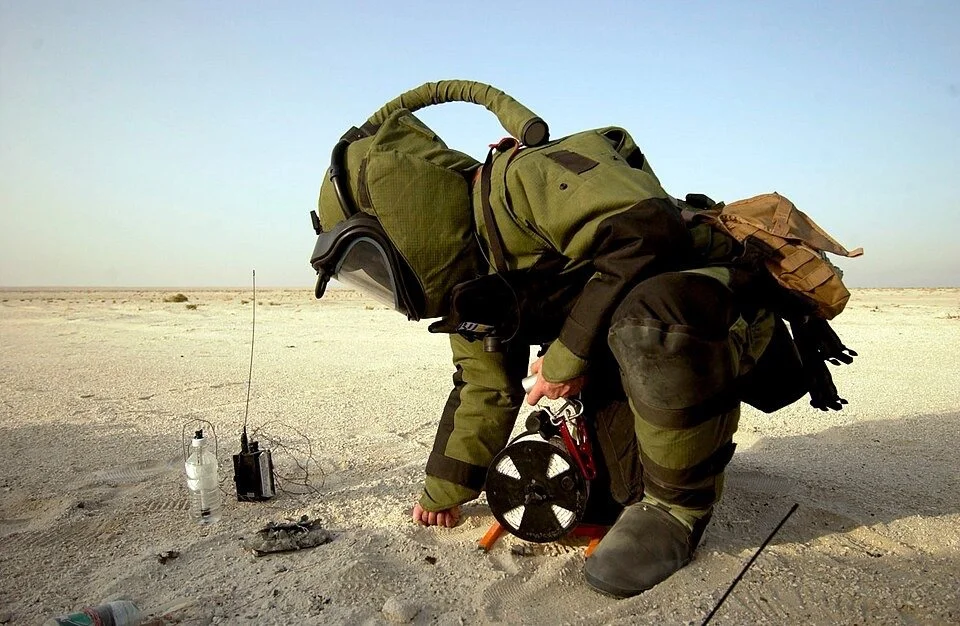
“That’s me,” he said casually. “Afghanistan. British Army. I used to disarm bombs.”

That caught me off guard. He didn’t look the part. No buzzcut, no glass-shattering stare. He was warm, thoughtful. Soft, but not in the Instagram-yoga way. Solid soft. The kind of person you’d trust in a crisis, or to hold your baby.

Of course he disarmed bombs. Everyone in this job had a backstory that made you question the selection criteria.

After a while, he added something quietly, almost as an afterthought. Before you could get near an IED (the short version of improvised explosive device) in Afghanistan, you often had to clear the site of casualties first. Bodies that had been lying in the open for days, sometimes weeks, in forty-degree heat. It wasn’t accidental. The Taliban knew exactly what they were doing.

Michael went on to say they would place IUDs beneath or beside the dead, deliberately. Knowing that soldiers would come. Knowing that no one leaves their own behind. The body was the bait. The despair and grief were the trigger mechanism.

The approach was straightforward, if you could call anything about it straightforward: the soldiers would tie a rope around the ankles of the body and drag them clear before you could begin to disarm the bomb. You didn’t kneel beside them. You tied the rope and you pulled from a distance.

Except the heat does things to a body. Decomposition in that climate is rapid and complete. And sometimes, when you pulled, the legs came away. Clean from the hip. Or the knee.

The only way I could relate was the woman’s leg I once carried after a train separated it from the rest of her body. I didn’t, however, have to contend with a bomb. The soldiers would adapt. Because the device still needed clearing. Because that was their job.

He described it the way you’d describe the steps for changing a car tyre. A logistical inconvenience. Something you encountered, solved, and moved past. I sat with that for a moment.

After a jaw-dropping conversation about life in Afghanistan, we drifted back to the workplace. Not the one in Kabul — the one in the prison.

“How’s the job?” I asked. “More specifically, how’s managing the staff?”

He let out a long sigh — the kind that comes from someone who’s seen too much. “Honestly? It’s hard. You try pulling someone up on performance and next minute you’re the subject of a bullying complaint. It’s impossible. I spend more time responding to bullying allegations than actually doing my job.”

I nodded. He wasn’t alone. I sensed something had shifted around 2010. By the time COVID rolled in, managing problematic staff had become a career-ending sport. HR departments had turned into Instagram therapists: “If someone feels hurt, then it must be bullying.”

Managers lost the ability to manage. HR went from being advisors to thinking they were managers — except they’d never actually managed anything. The good news was, we got to blame COVID for our social dysfunction. Just as the sailors years back blamed the bananas when things went wrong at sea. Truth was now negotiable. Intent didn’t matter. Performance management had become an interpretive dance of feelings.

When I coached managers, I gave them two pieces of advice:

  1. Always bring a witness. Preferably one who won’t cry.

  2. Be prepared to redirect the conversation twenty-three times back on topic, because those who need performance conversations are master illusionists. They’ll have you apologising for their behaviour before your coffee goes cold.

So, I asked Michael the obvious question: Where did you feel safer — managing staff here, or disarming bombs back in Afghanistan?

He leaned back, and without hesitation he said, “Honestly? Afghanistan. I felt safer. At least there I felt in control.”

He said it without flinching. No irony. No joke. Just fact.

And that was the moment I realised we are living in strange times. The man who literally defused live explosives in a war zone would rather go back to Kabul than manage Karen from Accounts.

That line hung in the air like a slow leak of gas.

And that’s when it hit me: what made talking to people more dangerous than disarming a bomb in Afghanistan wasn’t the subject matter itself. It was the loss of the ability to have conversations and debate — to work through the topic — rather than turning the conversation itself into a weapon of mass destruction.

A bit ironic, I know. Here we were dealing with the worst of the worst in society. Supposedly. Just remember, not everyone gets caught. And people in prison are the ones who commit overt crimes, not the covert ones.

When I say overt, I’m referring to those prisoners who come to the health centre escorted by the special operations group, handcuffed and chained, their movement restricted to the speed of regret. And despite the restraints, some still manage to get both hands around the head of a nurse, strangle them, and smash their head against a wall, or dislocate the shoulder of an unsuspecting prison officer who had let their guard down for just long enough.

As for remorse, none. Just a letter a year on, written from a cell where they spend twenty-three hours a day alone, the highlight of their day being “outside,” a cage with a view. Or a road trip to hospital after a self-inflicted injury that looks like something straight out of a horror film.

Despite providing healthcare, you don’t get thank-you cards or boxes of chocolates. You get letters, the kind that promise to kill or maim staff. Well planned. Sustained. The kind of correspondence that makes you realise this isn’t a symptom of trauma or pain, but something colder: strategic harm. A deliberate choice. Because for some, power feels better than intimacy. Control feels safer than connection.

So happens, this also occurs in men’s prisons.

It’s the stuff psychological thrillers are made of — but this isn’t a movie. It’s a workplace. Which happens to be a prison.

And the truly horrifying part?

Sorry, you’ll have to buy the book when it comes out to find out where this story goes!

Written by Jeremy Limpens

Comment

The Bureaucratic Oath

Comment

The Bureaucratic Oath

An extract from A Tale Told by an Idiot - Full of sound and fury, signifying nothing, a tragicomical memoir in progress.

Taking an Oath

While I'd been part of the corporate bureaucracy for many years, in healthcare, justice departments, aviation, shipping, mental health, justice, academia, international aid sector and an onion factory I worked at when I first left school, it was working for this ‘not for profit’ organisation that allowed me to see the entire absurdity of those that ran organisations. And here I was, back knee deep in the swamp.

Over the years, I found that the organisations typically failed in just one or two areas. Whereas this one managed to fail right across the board. Except of course creating the façade of diversity, equity, and inclusion. Providing you don't mention the lack of an access ramp at their own facility of course for a staff member that was confined to a wheelchair.

Just to be clear, Not-for-profit is a term regulated in Australia by the Australian Charities and Not-for-profits Commission, which has its own rather precise definition. Mine is a little different. Not-for-profit simply means any profit made goes straight into the directors' yacht fund, which is why there is never any profit left over. Yachts are not cheap to purchase, nor is their upkeep. I know this, as I once lived on one. Therefore I can empathise.

Over the years, I found that organisations typically failed in just one or two areas. This one managed to fail right across the board. Including the board members. Except of course creating the façade of a good culture, including diversity, equity, and inclusion. Because apparently if you convey it on the website, it's true. To make matters more interesting, the organisation provided services for people with disabilities. So that means they care. Apparently.

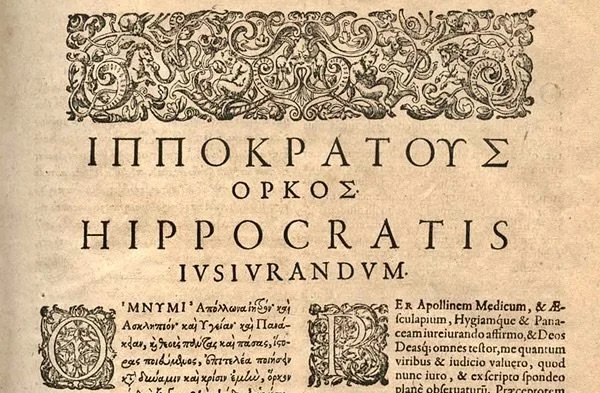
While I'd spent my career across different sectors, I was always connected with healthcare, where there were practice guidelines such as a code of conduct, and the well-known Hippocratic oath, with clear expectations when it came to professional and ethical behaviour and conduct. The Hippocratic oath itself is some twenty-five centuries old, attributed to Hippocrates, sworn in its original form on the names of Apollo, Asclepius, and a handful of other healing gods. Its substance includes pledges like never giving a deadly drug even if asked, never performing care beyond one's expertise, and never violating a patient's confidence or dignity.

The line most doctors quote it for — "first, do no harm" — doesn't actually appear in the original at all. It comes from a different Hippocratic text, and the oath itself says something closer to this: doctors must have two objects in view with regard to disease, to do good, or to do no harm. Centuries later, someone dressed that up in Latin, primum non nocere, and the tidier version stuck, quoted confidently by doctors who'd be surprised to learn Hippocrates never wrote it that way at all. Even so, it has outlived empires, and it still carries weight. If you didn't meet those standards, the general public have the option to report you to a registration body. Nurses and paramedics answer to that same board. Even the volunteer running the Bunnings sausage sizzle needs a food safety certificate to serve you a snag, which is more oversight than most executives will encounter in an entire career.

Even my time in aviation showed that if something went wrong, there was an independent body that would investigate if deemed necessary. Business, organisations, board members, CEOs and the like however, are governed by something like religion. Overseen by a nebulous construct, something vague and ill defined. There was certainly no 1800 number you could call, nor a governing body you could submit a complaint to. Come to think of it, like the merchant shipping industry and Las Vegas. What happens at sea, stays at sea. What happens in Vegas, stays in Vegas. And shipping does have its own laws, folk laws. Break them, and the angry sea gods will come knocking on your hull. Remember — no bananas on board.

I suspect if board members, CEOs, directors, and middle-tier demigods of dysfunction had to swear an oath before taking their seat, they'd ensure there was room to move. I suspect it would read something along the lines of this:

The Bureaucratic Oath

First, primum non nocere — do no harm. Unless of course it's to achieve profit, personal recognition, a big fat bonus, a bigger office with a window, or a designated car park closer than the handicapped spot. Secondly, non mea culpa — it's not my fault. Should the organisation be found negligent or associated with any wrongdoing, blame the banana.

I solemnly swear to prioritise personal advancement over staff satisfaction, more meetings as opposed to action, and management jargon over clarity: transparency, inclusion, equity, accountability, alignment, strategic direction, EBIT, culture and teamwork — a vocabulary I shall wield fluently to create a façade of competence and confidence. I vow to reward mediocrity, avoid responsibility, and deflect with strategic ambiguity. I vow to ignore problems that do not affect me personally, and I will become defensive should I receive constructive feedback. So help me corporate governance.

I will never deliver bad news without first assembling an HR taskforce to deflect responsibility. If a decision can be avoided, avoid it I shall. I'll remind myself to mention the term 'safe workplace' often, and adopt a set of Organisational Values that I'll claim come from 'staff input', and display them for all to see, to create the illusion of safety and integrity that applies to everyone except me. If someone challenges me, I shall make their role redundant. If a lengthy report containing smoke and mirrors can be produced, with all the management buzzwords, I shall produce it, regardless of the fact that no one reads or understands it. I shall cover my arse in emails, then copy in five unnecessary people and call it transparency. I shall ensure all communication is lengthy, passive, and utterly devoid of meaning.

Should a staff member feel uncared for at work, I shall refer them for counselling sessions through the Employee Assistance Program, affectionately known as EAP, to ensure they understand they are the problem. In the event an employee is unable to work due to illness or injury because of an unsafe workplace that I cultivated, I shall subject them to a fate worse than death: worker's compensation. From there, I will first deny the harm. Then attempt to shift blame. Then, while they are down, gaslight the employee by engaging an independent expert — an expert of our choosing — leaving the worker questioning reality, and feeling like they've been put out with the garbage.

Above all, I will protect the organisation's image, no matter how rotten its core. And God forbid, if a sorry is needed, I shall repeatedly utter the Latin term non mea culpa, while hiding behind my HR and legal team.

Should our business activities extend out into the community, forests, or third world countries, I acknowledge I have even more corporate social responsibility.

I shall ensure chocolate, clothing, diamonds, pharmaceuticals, and fashion are sourced from wherever the labour is cheap and desperate for work, and most importantly, no union in sight.

Should I get caught using children to harvest cocoa in West Africa, I shall express deep concern in a press release, commission an audit no one will read nor gain access to, while continuing to purchase from the same supplier under a different name.

Should our clothing be manufactured in a dodgy building no engineer would sign off on, a statement about 'shared social responsibility' will suffice — by which I mean everyone's responsible except me. Should our products have financed a war I'd rather not discuss, our marketing team will ensure our advertising states 'vegan friendly.' Should my supply chain be traced back to a smouldering patch of the Amazon, I shall sponsor a documentary about the importance of protecting it and promote it on our website and social media.

Enshrined into our yearly strategic plan, it shall outline: plant a tree for every forest we clear, sponsor a small school in an unknown village in Africa for every mine we dig, and place three solar panels on the roof of head office, somewhere clearly visible, to show we care about koalas. And of course, to be actioned by the marketing manager, fortunately also without a moral compass, and hoping for a pay rise.

As for vitamins and drugs, I shall price them at whatever the market, and the desperation, will bear. Should the medicine be one people cannot live without, I will look forward to my yearly bonus. Should a cheaper version exist elsewhere, I shall initiate a media release claiming it's counterfeit, unsafe, or 'not yet approved', and send my lawyers in to make sure it stays that way.

I shall test my lipstick, mascara, and my anti-ageing cream on animals who will never wear any of it, and promote the products as 'cruelty-free', based on the fact that the animals have never put in a written complaint.

I shall accept government funding for whatever project sounds most virtuous on a grant application, and shall rely on the government's inefficiency and incompetence so that no one ever asks what the money was actually spent on.

I shall commission a Corporate Social Responsibility report each year — glossy and image-rich, featuring at least one child, one tree, and one solar panel, none of which I have personally seen, except the one on head office's roof — printed, ironically, on paper from a forest I did not plant a tree for. Ethics, I rely on, to be hard to define. I shall dump, exploit, or extract freely, so long as the fine, should it ever arrive, costs less than the profit already banked.

Should a river run a colour not found in nature downstream of my factory, I shall commission a study to determine whether the colour was always there. I shall retain an 'independent' environmental consultant — independent, of course, providing no one realises we paid them. The consultant, usually bearded, in a shirt that's seen better decades, driving, ironically, a diesel ute, operating in what can only be described as a quiet cartel with my legal team — a partnership sealed not in blood, but in billable hours. Should the community persist, my legal team, wearing expensive suits, will intimidate and overwhelm those who got sick from drinking the water downstream, using the slightly edited, redacted, biased environmental report that clearly proves non mea culpa.

Where waste is found too toxic for the ground or water, I shall investigate the feasibility of dumping it on the moon. Failing that, the deep sea. Failing that, a country whose government takes bribes in the form of the savings we've made from using cheap labour — placed out of mind, out of sight. Failing that, call the independent environmental consultant again, who I have on speed dial. No doubt still wearing the same shirt.

And should any of the above ever threaten to become a headline, I shall keep on retainer a communications team who function like the fixer in every crime film — arriving fast, speaking little, executing a media release that reads like a cross between a politician and a cryptic astrologer, and leaving the scene spotless before anyone notices.

Above all else, I always return to the question that brought me here in the first place: how does this benefit my status, my next promotion, my fancy house that I don't spend much time in, or my bank account.

So help me, shareholders and board members.

Alternatively, there is the more simple oath, the Narcissocratic Oath: "If I look good, we did good."


Written by: Jeremy Limpens

Comment

The Quest for the Holy Grail

Comment

The Quest for the Holy Grail

An excerpt from A Tale Told by an Idiot — Full of sound and fury, signifying nothing. A tragicomical memoir in progress.

Chapter 11 - The Quest for the Holy Grail

By this stage in my life, I'd been heckled by angry bystanders on the side of the road as I attempted to check if Louise was alive. Carried a woman's completely severed leg with a not so happy ending. Performed CPR on a fat guy out at sea, to attempt to save him, but also to please the drunk crowd of cruise ship passengers. Told pilots to fly faster to avoid the mess of delivering a baby in the back of an aircraft. Been accused of killing not one, but two people. Lived amongst Indigenous communities at opposite ends of the world, and amongst the wealthiest and poorest. Out at sea, and in deserts, cities and beachside towns. Been paid good money to stay at home because the CEO didn't like what I had to say. Run through the night, with my daughter in my arms to avoid a crazy man with an axe. Navigated false allegations from someone that belonged in a psych ward, not once but seventy-two times. Flown patients out of remote areas in storms, even though there was no rush. I'd also attended health retreats, lectures on health, presented at conferences, worked with health experts, watched health gurus on social media and in documentaries and read my fair share of books and research articles.

Turns out, despite all the sound and fury, it did signify nothing. When I say nothing, I mean no Holy Grail.

Turns out, I was the idiot. Looking for something that wasn't something tangible. Something that can't be proven, measured, or considered an absolute.

After thirty years, I can say this with confidence: healthcare stopped being about health a long time ago.
It became a performance.
A marketplace.
A show.

Back in the eighties, in the era when music had a soul, we walked and rode bikes just because it was fun, we talked directly to each other, no phones, and had to get up to change the channel on the TV. We spent time together on Sundays; it was a day off for most. Life was simpler. Less choice, yes, but that was a good thing.

Sure, healthcare had its issues, but it was still recognisably human. Over the decades, it morphed from a service into a spectacle. And of course, along came social media. As a comedian once said, back in my day, the crazy people spent most of their time in the basement. Now they have social media, and an audience.

One thing became clear: health started to look less like care and more like the cereal aisle at the supermarket. A cluttered barrage of brightly coloured promises, each one screaming, "Pick me!" And just like the cereal aisle at the supermarket, the bigger the box, the more sugar-coated the sales pitch, the less substance inside.

Health shifted from something quiet to a big billboard. It became something you buy and promote, not something you did without talking about. Everything now comes with a pitch, a logo, and a slogan. "The latest research suggests…" "This may improve that." "Early studies show promising results."

Suggest being the operative word.

Health now?

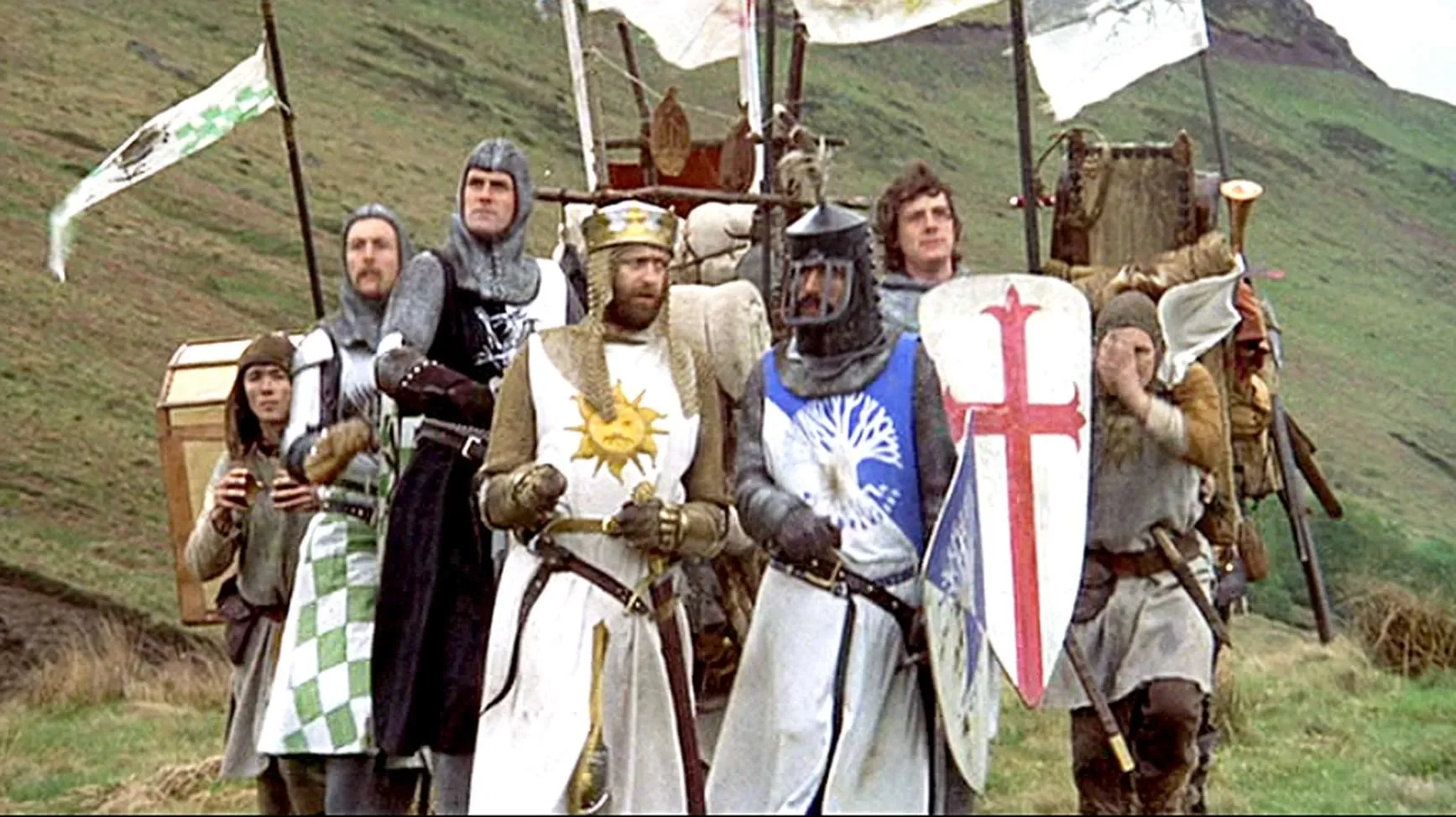
More like a medieval scene involving the knights at the round table, on the quest for the Holy Grail, which goes a little like this: King Arthur held a great feast at Camelot, with all his knights gathered around the round table. One year, the Holy Grail appeared, with the promise of the truth. Veiled in a white cloth. Each knight found before him the food they most loved. Then, as quickly as it came, the Grail vanished. Rather than finish the dinner, the knights leapt up and swore an oath to find it. Each knight entered the forest alone, at the point he chose, where it was darkest and there was no path, to reclaim the Holy Grail.

The quest went on for years. Some never returned at all. Only three came close: Galahad, who found the Grail, died soon after. Percival, who gave up a worldly life, became a hermit. No phone, no followers, no five steps. Only Bors came home to tell the story. I can relate to the last two. The round table was never the same again.

Instead of Lancelot, Galahad, Bors, Percival, Gawain, Kay, Tristan and Mordred sitting at the table in Camelot, we have a different line-up at the table, having returned to tell the story, filled with promises relating to health and prosperity.

At the round table now, we have medical doctors pushing medication, surgeons wielding their scalpels, hippies with bongo drums and vegan dishes, wellness gurus with their retreats, social media influencers with their 5 steps, and self-help book authors with their advice on how to help yourself, which is technically an oxymoron. Then there's the friend promoting multivitamins while sucking on a vape, a paramedic wanting more ambulances, a nurse wanting more hospital beds, mental health experts with their feelings, a psychiatrist handing out scripts, a health researcher with his pile of peer-reviewed articles, and a public health expert convinced vaccines don't cause autism. And of course, a feminist blaming men for women's health issues, and a men's health advocate pushing for a men-only hospital. Also, at the table, the cosmetic industry insisting bigger lips and bigger tits are the way to inner happiness, allied health insisting on another appointment, GPs saying no more exercise or diets, because we have Ozempic, and finally the lawyer and barrister looking for opportunities.

All claiming they have the Holy Grail. Follow me. Like me. Pay me. Unless you have a Medicare card, in which case it's free.

I've been sitting at this metaphorical round table for years. Listening, watching, contributing. As I travelled, and observed, my ideas evolved. In the beginning, the less I knew, the more I thought I knew. As time passed, the more I learnt, the less I actually knew. Turns out each Holy Grail was an illusion. Like the cereal aisle.

As I looked back over those years, I realised something. Thirty years earlier I'd walked into healthcare believing there must be someone who knew. Someone with the answer. Now, after travelling the world, I found myself sitting at a table where everyone had an answer.

That was the problem.

In the eighties, the conversation at the 'round table' was simple. Go outside. Come home before dark. Eat meat and three veg. If you get sick, see a doctor.

The conversation at the round table now?

Something that resembles a merry-go-round, a wrestling match, a bowl of cooked spaghetti, members of parliament trying to agree, and a drunk guy that's lost his glasses while making a cocktail.

It couldn't be at my place; my table is long and rectangular. I sit at the head. Unless of course my daughters beat me to it.

I'd assume it would play out something like this…

Firstly, most would arrive late. It's up to patients to be on time, not the experts.

As people introduced themselves to each other, the pre-round table conversation would start out as casual.

You know the kind. Which university they attended, how many letters they have before and after their name, which facility and faculty they work in, how many followers they have on social media, showing pictures of themselves lifting weights, the title of their TED talk, which suburb they live in, a famous person they once treated, the time they carried someone's leg that had fallen off, the time they disarmed a bomb in Afghanistan.

Soon after, the conversation shifts. Onto their version of health. If you take this, do this, or have this, it will help this or that. But if you don't, something else might happen, according to the latest research, the latest viral social media post.

With dinner soon to be served, and as with all good dinner parties at a round table in Camelot, people take their seats. Ideally next to someone interesting, awkward for the Vegan I know. Then the wine begins to flow, followed by an elevated energy in the room, thanks to the wine-induced social lubricant, and the onset of banter and laughter in the room.

That is until the mood shifts, thanks to the neurologist, who points out that this red wine will kill your brain cells. The French cardiologist thinks differently, however. "C'est bon," he calls out as he raises his glass in a toast, saying "it's good for your heart," backed up of course by the latest research funded by the wine industry. Then the psychologist steps in, claiming it's good for your social life, which in turn is good for your brain, much to the disgust of the public health expert on the opposite side, and the wellness guru that's sitting on the floor in a yoga pose.

The neurologist asks for a coffee. The oncologist insists coffee may definitely sort of cause cancer, while at the same time, the barista in the corner rolls his eyes. Either way, there will be a barrister willing to argue the case regardless, as long as you pay him accordingly. At that point, the personal trainer suggests going outside. Sunlight is dangerous, according to the dermatologist, oncologist, skin care specialist and the other people ending in 'ist'. Except the feminist, who's waiting quietly for the proposal of a men's hospital. The GP suggests otherwise. If your vitamin D is low, go outside. The therapist agrees, otherwise everyone will come down with seasonal affective disorder, according to Google.

As the wine continued to flow, for some, around the table, with the exception of the wellness guru, who remained on the floor in what I think was either called a reverse doggy or downward dog position, the conversation about health and the Holy Grail continued.

Eggs are bad according to the vegan, unless they come from a chicken that's done yoga, says the hippy in a tie-dye shirt with multiple piercings. The dentist says floss daily and reduce sugar; however, the nutritionist says drink sugar free. The endocrinologist says artificial sweeteners cause cancer, as he sits sipping on wine and smoking a cigar, much to the delight of the pharmaceutical rep selling chemotherapy.

One thing they all agreed on was that to be well, one must rise at 5am for an ice bath that simulates a near-death feeling, according to the guy wearing clogs from the Netherlands, while chanting affirmations about pain setting you free. Followed by 10,000 steps captured by your Apple Watch, as opposed to eating an apple, in between brunch spots serving Buddha bowls named after emotions you've never heard of.

Just to be clear, when I say everyone, I mean everyone sitting on the floor on a yoga mat.

He went on to say, attend a retreat that I suspect has more mirrors than a narcissist's bedroom, along with regular sessions with a psychotherapist named Sage, and replace your GP with a barefoot woman selling kombucha from a van called "The Gut Whisperer," and make sure you get your chakras aligned. Rather than invest in ethical shares, invest in you as part of your self-care regime, including $300 on a sound therapy session where a man in white linen pants hits a gong while you lie wrapped like a sushi roll in a body wrap made of seaweed. And of course, this should be followed by red light therapy, which is likely to result in a class action lawsuit in ten years' time, to the delight of the no win no fee lawyer and barrister sitting at the table. How could I tell? I could see their eyes light up, as they licked their lips, while sipping on a glass of expensive whisky on the rocks.

Speaking of licking lips and whisky, yep, you guessed it, the conversation shifted to diets.

Of course it did, because you can't enjoy eating food now without talking about weight loss and calories. A social media influencer's pot of gold at the end of the rainbow. The dietitian says carbs are essential; the diabetes educator says they're the enemy; the psychologist raised childhood trauma, again, and the social media influencer says the keto diet is the key to health and weight loss. The vegan was not happy!

The cardiologist insisted on eating fish because it's good for your heart; the environmental scientist, who nobody actually invited, says no fish because it's filled with mercury and unsustainably sourced. The vegan, which we knew because he made a point of telling everyone, twice, went on to accuse the cardiologist of being a murderer.

I thought I'd best not mention my deep fryer at home.

In the end, listening to all the experts has a similar effect to wine. Lightheaded and a spinning sensation. The technical term: discombobulated. I've decided that you're more likely to solve the mystery of whether the moon landing was real. Unless you ask the bariatric surgeon, the pharmaceutical industry, or the personal trainer. Because apparently, they know about moon landings also.

But thankfully, we now have a pill, according to the drug rep sitting there drinking the wine that the pharmaceutical company provided as their way of saying thank you! And of course, sitting quietly, guess whose eyes lit up, as they licked their lips, with a glass of expensive whisky on the rocks in hand, when they heard about this magical weight loss pill that's likely to go pear-shaped.

The vegan, however, sat frustrated. He already knew how to lose weight, muscle, and a sense of humour without needing to take a pill.

With the conversation now sitting in the camp of our biggest health crisis, the disease of having too much choice, the next topic was addictions. And of course, the wellness guru had something to say. The solution is simple, he said. Self-love, self-care, self-respect, sell-fish and a yoga mat. Selling fish didn't make sense to me, but I didn't ask as I didn't want to upset the environmentalist, again. Apparently, Alcoholics Anonymous thought otherwise, but couldn't be there to share their views, otherwise they would no longer be anonymous. The self-help author, however, felt it was a good opportunity to promote their book. Four steps instead of twelve, and no need to say sorry.

And then of course, the detox option: a health retreat in Bali where you can fast for 30 days, drink imported air and align your inner child with a moonstone, and colonic irrigation using, of course, bottled water. Nothing says "healing" like a high-pressure hose up the backside. According to the psychiatrist, however, it's most likely depression. Easy fix, a prescription that resolves your serotonin levels, even though there is no test for serotonin levels.

Eventually the personal trainer spoke up. He'd finally finished his push-ups, chin-ups, sit-ups, and running on a treadmill that goes nowhere. And he had the answer. It was simple.

As he sipped on his Body Protection Compound 157 peptide-infused protein shake, he said everyone should get themselves a personal trainer, to help you train for… training. Yep, that's right, people training for nothing except to look better in their activewear, and to be guided through a sequence of push-ups, squats and carrying an old tyre over your head. When? Before sunrise, in the dark, when your circadian cycle is most aligned with the ideal metabolic rate.

Before the personal trainer returned to doing more push-ups, he made it clear it's important to track your steps, count calories, and take selfies in activewear designed for peak performance on the café circuit, along with attending wellness check-ins and running fun runs that are neither fun nor run, unless you consider shuffling in Lululemon designer Lycra while sipping kale shots and comparing protein powders fun.

He then handed his flyer around the table, and ran off into the sunset, while doing star jumps. To be fair, he did look good in his activewear.

At that point, the bariatric surgeon spoke up. Less is more. By less, he was referring to a stomach. Not food.

At that point, I was feeling like I'd just come out of a spinning industrial dryer, accompanied by a bowling ball and a free-range chicken.

Just when we thought we'd covered enough, the plastic surgeon, with his perfectly glowing smile, stood up, accompanied by his cosmetic nurse of course, and said it's simple. The key to health is to look like a Hollywood star. I found it hard to focus at that point. Big lips, eyelashes and well-defined cheekbones. I'm not referring to the nurse. Before I knew it, they too handed out flyers and skipped out the door while holding hands and chanting something about bigger is better, Botox is the best.

At that point, the hippy said Botox gives you cancer. The oncologist said no problem, we have chemotherapy; the hospital administrator said is that necessary, because that's expensive. The palliative care nurse said let's talk quality of life, and the Buddhist monk in his orange robe, sitting cross-legged on his chair, said let's meditate and embrace acceptance. The wellness guru, still sitting on the floor, said in his monotone voice, don't suppress your emotions. The allied health worker said in a high-pitched voice, we want a pay rise. The feminist pointed out it was a human rights issue, a problem because of the male patriarchy. The men's health advocate stood up to speak, but sat down again, as he feared the feminist.

At this point, my head was spinning, my back aching.

Big mistake. I shared my feelings. In hindsight, I should have kept my mouth shut.

The physiotherapist said I needed to stretch more, the occupational therapist said I needed an appointment, the surgeon suggested surgery, the psychologist asked about my childhood, the masseuse said it was a knot, the rheumatologist suggested I needed fish oil, the guy on social media had five steps, and the osteopath got up, cracked my back, then proceeded to schedule me in for another three sessions.

The pharmacist then leaned across the table and, with an open hand, offered a range of pain relief tablets. In his palm, he had Ibuprofen, ibuprofen sodium, Nurofen, Nurofen Back Pain, Nurofen Period Pain, Nurofen Migraine, Zenifen, Zenifen for Children, Chemists' Own Ibuprofen, Neo Health Ibuprofen Liquid Capsules, Brufen, and Advil. Double strength, single strength.

In a moment of silence, the drunk guy making cocktails without his glasses, with a drink in hand, asked a question: Aren't they all the same drug, just different packaging?

In that awkward moment, I suspect everyone thought the pharmacist also worked for the cereal industry.

Fortunately, the French cardiologist raised his glass and said, "Je trinque à ça !" I'll drink to that.

In the end, the guy in a white lab coat, bald head, thick glasses, had this to say. People that have thick thighs, walk quickly, and take naps are less likely to die. Because apparently, you can prevent death.

At that point the wellness guru, pharmaceutical rep and Vegan walked out, on account of either having skinny legs, or being offended at the thought of people dying. The wellness guru walked fast. The pharmaceutical rep indicated he needed a nap after too much wine. The vegan indicated he was always tired.

Reflecting back on the evening, they could not even agree on the definition of health!

  • Doctor – The absence of disease

  • Wellness guru – Maintaining a high vibrational frequency, aligned chakras, and regular appointments for a bowel cleansing

  • Personal trainer – The ability to do lots of squats

  • Yoga instructor – Looking good in spandex pants

  • Lawyer and barrister – The more medical errors the better

  • Feminist – A male-free life

  • Men's health advocate – Eventually seeing a doctor despite having chest pain for the last month

  • Cosmetic industry – Bigger is better

  • Self-help author – The ability to help yourself by needing a self-help book

  • Paramedic – Someone that uses Uber to get to hospital

  • Nurse – A pay rise

  • GP – Someone that does not require more than a five-minute consult

  • Chiropractor – A slightly misaligned spine that requires three visits a week for the rest of your life

  • Dentist – Someone with enough money to get their teeth straightened

  • Psychiatrist – Someone that stays on their medication

  • Psychologist – Someone that can spend 50 minutes talking about their feelings

  • Vegan – Staying awake for more than three hours

  • Health researcher – According to the World Health Organization in 1948, "a state of complete physical, mental and social well-being and not merely the absence of disease or infirmity." He then looked around the table and realised no one qualified, including himself.

And there you have it. The likely outcome if you brought together the 'experts' as we affectionately know them today, to discuss health-ish, at a round table, in Camelot, while drinking wine despite the risk of damaging brain cells.

Apparently, knowledge is power.

Little did Sir Francis Bacon, from the sixteenth century, realise what would eventually come when he proclaimed "ipsa scientia potestas est," meaning "knowledge itself is power." He never knew Wi-Fi and social media influencers would come along.

I suspect if the Vegan knew this saying came from someone with the last name Bacon, they would not be happy.

Either way, as I said, knowledge now resembles something more akin to a merry-go-round, a wrestling match, a bowl of cooked spaghetti, members of parliament trying to agree, and a drunk guy that's lost his glasses pouring wine for the knights of the round table, on their quest for the Holy Grail.

And as you can imagine, a hard group to cater for, with their dietary requirements and different seating preferences.

The answer, it turns out, was far simpler. It had been hanging in my shed the whole time.

Sorry — you'll need to buy the book when it arrives to find out how this story plays out.

Written by; Jeremy Limpens

Comment