An excerpt from A Tale Told by an Idiot — full of sound and fury, signifying nothing. A tragicomical memoir in progress.
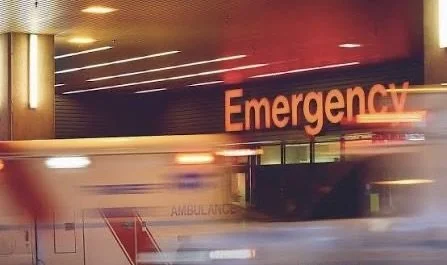
Most people don't realise an emergency department is made up of different parts. Triage, the front desk. The gatekeeper. Like checking in to a hotel, but you can't book ahead of time. And you're unlikely to get the same warm greeting. Beyond the guarded doors, there is the trauma/resus bay. That's where the really sick or injured people go. Without timely care, bad things happen. Then you have the acute beds. Less urgent, but maybe urgent, but most likely not. And then you have the other section. Sure, you need to be seen, but if you wait until next Tuesday, you'll still be OK. And then of course, the waiting room. The place you go because technically we can't say piss off and see your GP, chiropractor, psychologist, or barista if symptoms persist.
My favourite place to work in the ED? Triage.
This was its own circus. The word triage comes from the French trier — to sort.
You sat at the front desk sorting the truly urgent from the mildly inconvenienced. In wartime, triage prioritises the healthiest so they can return to battle. The near-dead are left until last. In civilian medicine, we reverse it — though it doesn't always feel that way.
There were a few home-grown rules I followed — the unofficial kind, only ever said out loud in the tearoom — that weren't included in formal triage training, but helped me sift through the noise that came through the front door. If someone is yelling and carrying on, they can't be that sick — you need to be well to complain. If they came in having been physically assaulted and told you they were innocent, they weren't. If they had more than four different complaints, they can sit in the waiting room and tell other people about their problems. And if they arrived via ambulance on a stretcher but had the capacity to stand or sit, off to the waiting room they went. Ambulance officers are not babysitters. That was our job. Remember — to sort.
Most people who came through the door didn't need emergency care. What they needed was a GP. Or a counsellor. Or maybe just a friend. Or to realise that stupid life choices don't always end well. One pattern I noticed amongst the thousands of patients I triaged came from a quirky question I liked to ask. Not a typical question, just one of my own because I was curious. People that presented with longer term chronic illness, both physical and mental, I would ask, "What hobbies do you have?" I would get the same perplexed look, and often a question in return. "What do you mean?" After asking that same question for years, I came to see people with chronic illness lacked a hobby. They tended to not have something in their life they loved doing. Initially I wondered, was it a chicken or egg question. Years on however, I thought it's irrelevant. Either way, find something you love doing. It can't hurt.
Still, there was something oddly satisfying — in a dark way — about sifting through the chaos at triage in a big city hospital, the different cultures, personalities, presentations and ages, and figuring out who actually needed help. There was a serious side to this role. If you got it wrong, people would die. Literally. But as time went on, I came to realise, if they weren't urgent, they still needed someone. Some people are just scared. Lonely. Don't have good people in their lives. They are lost, and just need someone to listen, to see them, to care. Turns out, caring matters more than I'd given it credit for. But amidst the noise and chaos, sometimes we forget.
There was no lack of variety when it came to the people; thankless, rude, drunk, hard to understand, impatient, manipulative, lacking empathy, narcissistic, culturally diverse and obtuse. Fortunately, not all the staff were like that.
Staff ranged from adrenaline junkies, fixers, heroes, do-gooders, saviours, drama seekers, and those just simply there because it seemed like a fun idea at the time. Some with compassion. Some not so much.
I recall a time at triage when an overly seasoned nurse called Shaz — who had the appearance of someone that had just returned from a six-month dog-sled expedition to the South Pole — was approached by an elderly lady in the waiting room. It was late at night, she had been waiting for hours on those hard plastic chairs and was cold. The lady asked, "Excuse me, do I have time to pop home and grab a cardigan?"
Shaz, well past her expiry date and having depleted her supply of compassion and empathy some years back, responded.
"Honey, you've got enough time to go home and knit a bloody jumper by the time you're going to get seen."
We patched people up, moved them on, and did it all again the next day. In some ways it was a production line. The quality of care depended entirely on who was working that day. Presenting to an emergency department was like heading into a casino and placing your money on the roulette table. It was a gamble. But that's life.
You might get someone clinically competent but with the compassion of the knit-a-jumper nurse. We've all met them. Or at the opposite end, you get a nurse or doctor who epitomises caring but has the confidence of someone flying a plane for the first time and forgets to complete the checklist. Then you have charming. Be careful though, sometimes they don't follow through. If you're lucky, you get the trifecta. Caring, competent, charming. But if I had to choose, I'd take competence over charm and caring every time.
There was, however, a nuance when it came to competence. There is technical competence, knowing what to do and how to do it, but also something more subtle. One day I noticed it while working in ED, during a shift where I had spare time on my hands. My area, the trauma bay, was empty. I wandered out into the acute area and offered to help. A nurse indicated she was yet to have her lunch break. I received a short handover before her break. When she got to the patient in bed 15, I mentioned that I had triaged her into the department the evening prior. The nurse said with a frustrated tone, "The patient's waiting for a bed on the ward, and I've had to change her sheets and gown multiple times because she keeps vomiting, and I think she's vomiting again."
Don't worry, I said, I'll sort it.
After I pulled back the curtains, the patient was vomiting into a big stainless-steel bowl. Her vomit, however, was fresh blood. The patient looked extremely pale, weak and exhausted. I quickly hooked her up to the monitor. The numbers on the screen were not good.
I called for help. We worked on her. Too late. By the time the nurse returned, the patient was dead.
When I told her, her face remained blank, expressionless. Unlikely to be Botox, as it had only just hit the market.
While I'm no coroner, I did notice a pattern, something a coroner can't see, because they are not there. It came down to being task-focused. Like the pilot with their checklists. Problem was that things change. Often.
Some staff had the ability to tune in and adjust their direction when needed. They noticed the subtle things, and in that moment, they stopped. Whether it was a patient who said they just wanted to die, or a patient vomiting fresh blood. Very different situations, but both matter. Because the person in that moment matters. Some, however, stayed on track, ticking things off their checklist, missing the moment altogether. The means became the end. As time passed, I kept seeing it.
Some put people over tasks, others task over people. A few did both well, but most sat at one end or the other. People on the receiving end, patients, families and colleagues, might not be able to name it, but they feel it. It's hard to put a figure on, because the tasks need to be done. But there is something cold about it. People don't feel seen or heard. And noticing is part of the task.
There was however another twist. The all-elusive emotions. You can't test for them, but apparently, they existed. I came to realise that people who work in emergency services — including me — tend not to feel all the emotions. According to Gloria Willcox's Feelings Wheel, humans can feel around seventy-two. Emergency workers, however, experience about ten. We don't have the need for more. But this is what I observed:
Shock – The feeling you get when you finally get a break
Sadness/crying – The feeling when your break is over
Hungry – While technically not an emotion, it's a common feeling when you don't get a break
Nauseated – The feeling you get from doing night shifts
Overwhelmed – The feeling from a full bladder
Laughter – The better alternative to crying
Bewilderment – How did they get something so big up there?
Detachment – The lack of feeling while carrying the patient's leg
Numb – My favourite. The cousin of detachment. Apparently an emotion, but you just can't feel it.
Gratitude – The feeling you have for feeling numb
Just remember — I don't have the attention span to do a PhD on this, nor the focus to complete a pre-flight checklist. It's just something I noticed. Not in one place, but many. In Australia, across different states, and overseas. And eventually within myself.
For a long time, I still hadn't progressed very far emotionally from the day a woman told me she wanted to die. I'd learned the skills to navigate those moments, but my inner emotional world remained opaque — out of sight, out of mind. My excuse? The environment. You tend to be the average of those you hang around. Mostly, we stayed clinical. We leaned heavily on dark humour. Unhealthy? Maybe. Maybe not. Maybe there's some merit to dark humour — otherwise known as tragicomical, as I later learnt. Twenty-five years later to be exact.
I wasn't alone in that. The problem was, none of us knew it.
Sorry — you'll need to buy the book when it arrives to find out how this story plays out.
Written by: Jeremy Limpens